Removing Users

More results...

Generic selectors
Exact matches only
Search in title
Search in content
Post Type Selectors
Articles

When users no longer require access to Onflo (formerly Let's Talk) (e.g. they no longer work in your organization), they should be made inactive. While all of their previous interactions are archived in the system, they will no longer be able to access Onflo on desktop and mobile. 

Deactivating User


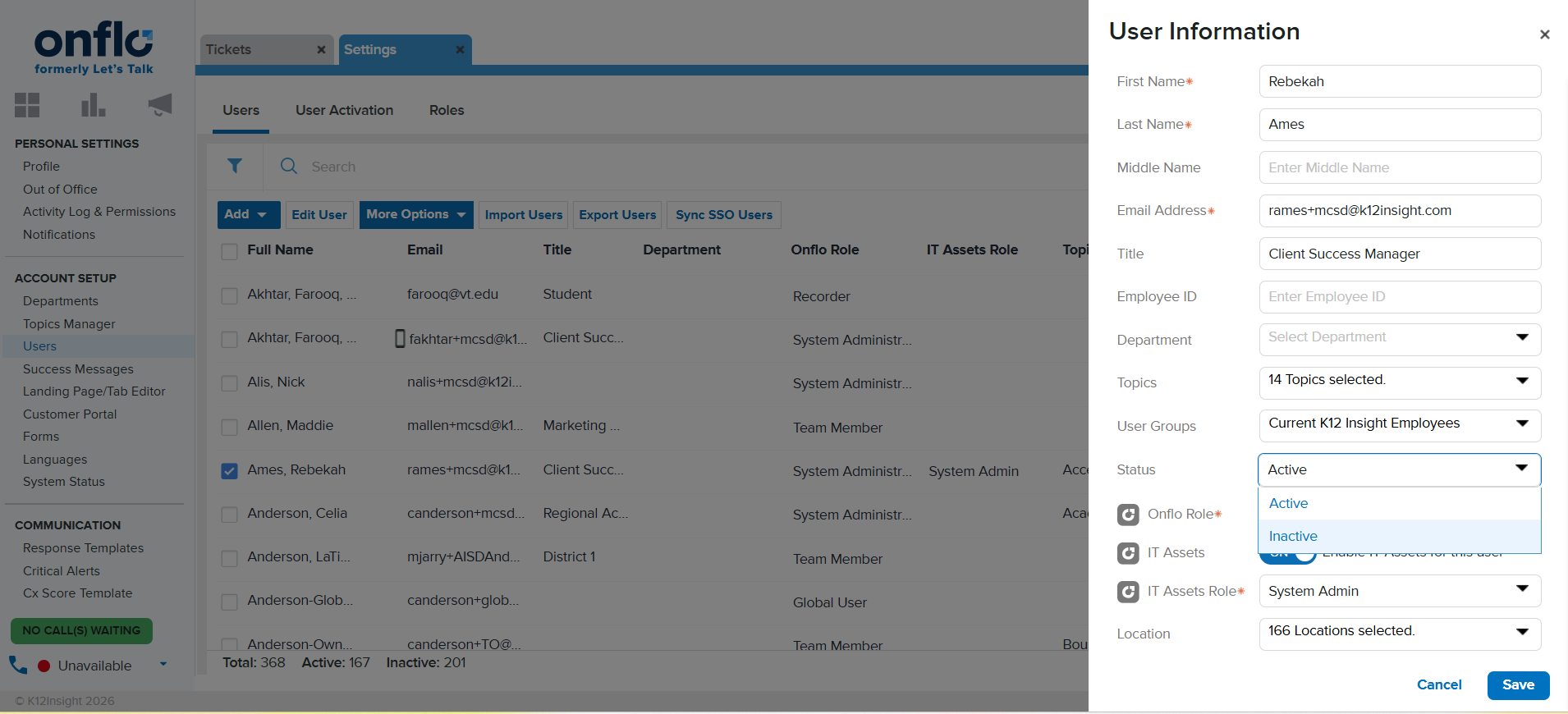
  • Navigate to Settings > Users.
  • Click on the full name of the user to open the user’s profile.
  • Change the status of the user from Active to Inactive.
  • Click Save Changes to exit profile.

Screenshot 2026 01 13 154517

Delete Users

You can delete users within Onflo once they are Inactive. To delete a user follow the directions below:

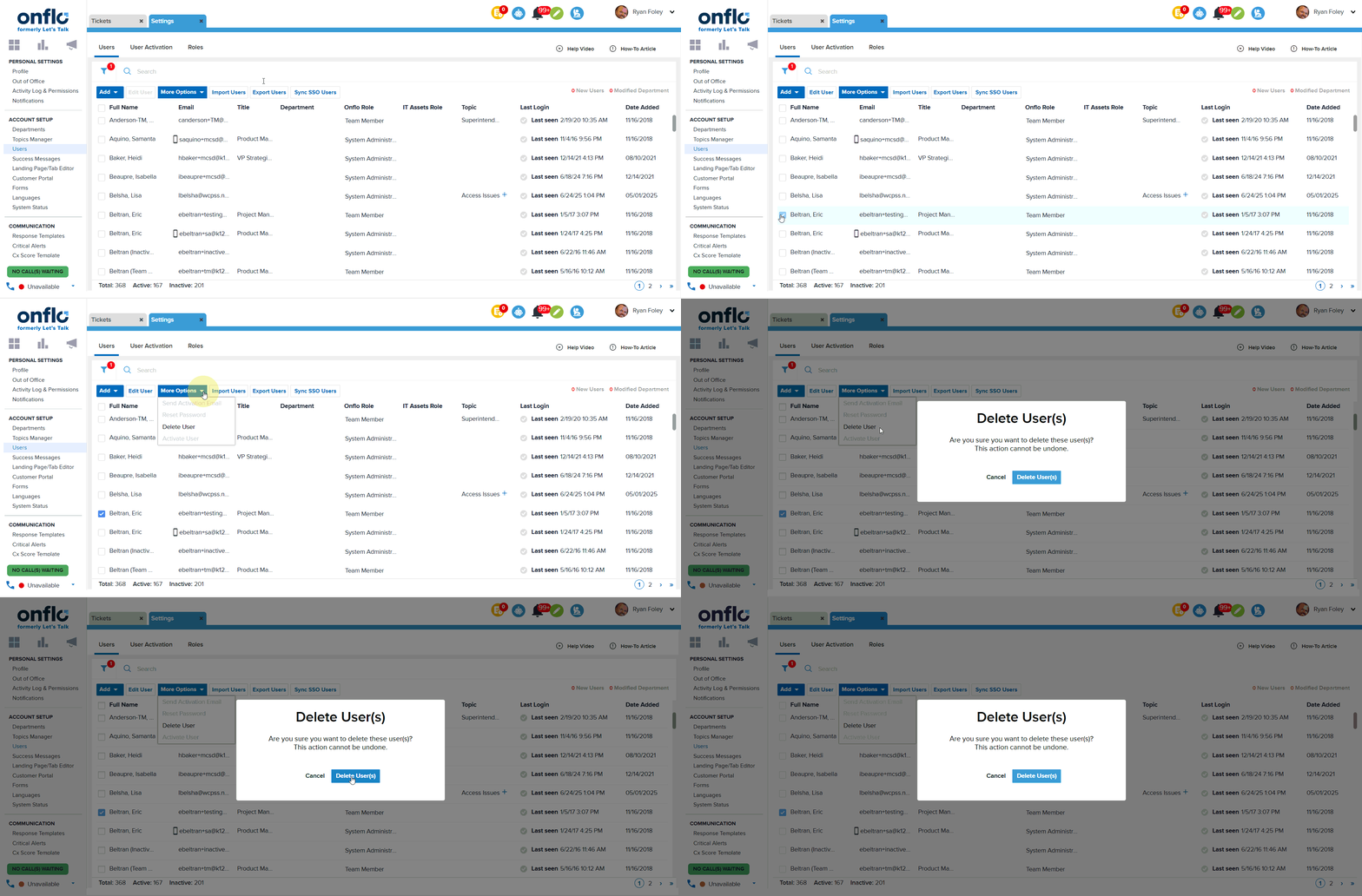
  • Search for the user. Once you have found the user check the box next to the Inactive users name.
  • Click More Options, then click Delete User.
  • Click Delete User(s) 

GIFRecording20260113at3.56.03PM

Note: Once the user is deleted this process is irreversible. Retrieving information for tickets associated with deleted users will not be available.

Related Post

Tasks for Tickets in Onflo

Overview Onflo allows you to create and assign tasks in tickets. This helps teams collaborate across departments by keeping all related actions and approvals within a single ticket. Each task can include a name, description, and owner, allowing you to

Read More ➜

Departments for Topic Ownership

Aligning your Onflo (formerly Let's Talk!) topics with Departments that mirror your district's structure is important for user and topic management. To manage these settings, System Administrators can navigate to the Departments page within Settings. From these settings you can

Read More ➜

How To Disclose Confidential Information

Overview Onflo (formerly Let’s Talk) may be used to report issues of a more serious nature that need to be escalated to officials or handled by staff within or outside of your organization. When these situations arise, Onflo can provide

Read More ➜